Concepts
Networks (Wiring)
The AgentNetwork wires everything together. You declare channels, register agents with their subscriptions and publish targets, and the network manages the event plane at runtime.
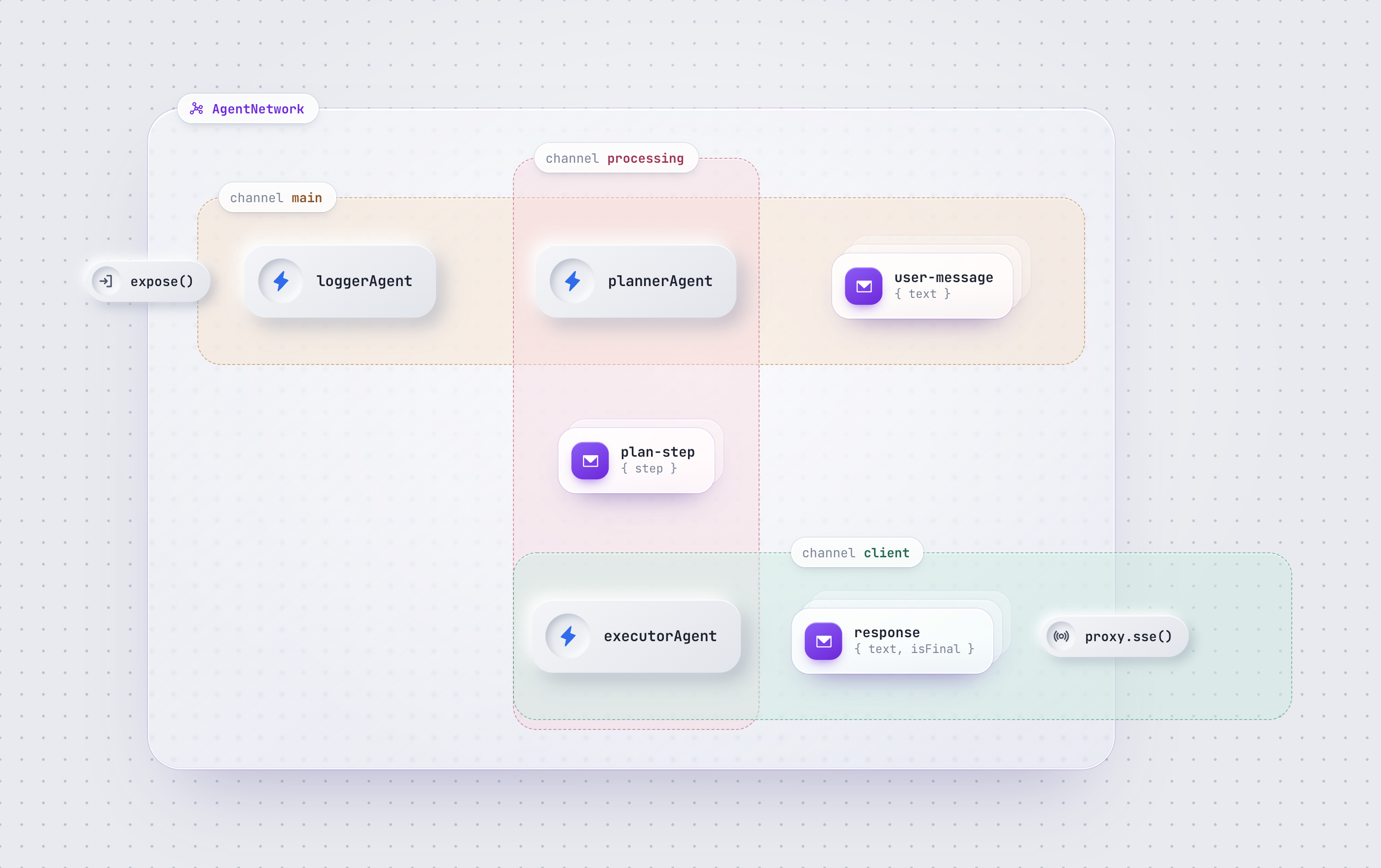
Setting Up a Network
import { AgentNetwork } from '@m4trix/core/matrix';

const network = AgentNetwork.setup(
  ({ mainChannel, createChannel, proxy, registerAgent }) => {
    const main = mainChannel;
    const client = createChannel('client').proxy(proxy.sse());

    registerAgent(myAgent).subscribe(main).publishTo(client);
  },
);
Setup Context
| Tool | Description |
|---|---|
mainChannel | The main channel, where start events are published (a channel, not a function) |
createChannel(name) | Creates additional named channels |
proxy | Provides proxy factories (sse(), custom(kind)) |
registerAgent(agent) | Registers an agent and returns a binding builder |
registerAggregator(aggregator) | Registers an event aggregator and returns a binding builder |
endsOn(event, when?) | Declares a terminal event that completes the run |
Multi-Agent Patterns
Agent Chain
Events flow through a series of agents:
registerAgent(plannerAgent).subscribe(main).publishTo(processing);
registerAgent(executorAgent).subscribe(processing).publishTo(client);
Fan-Out
One event triggers multiple agents in parallel:
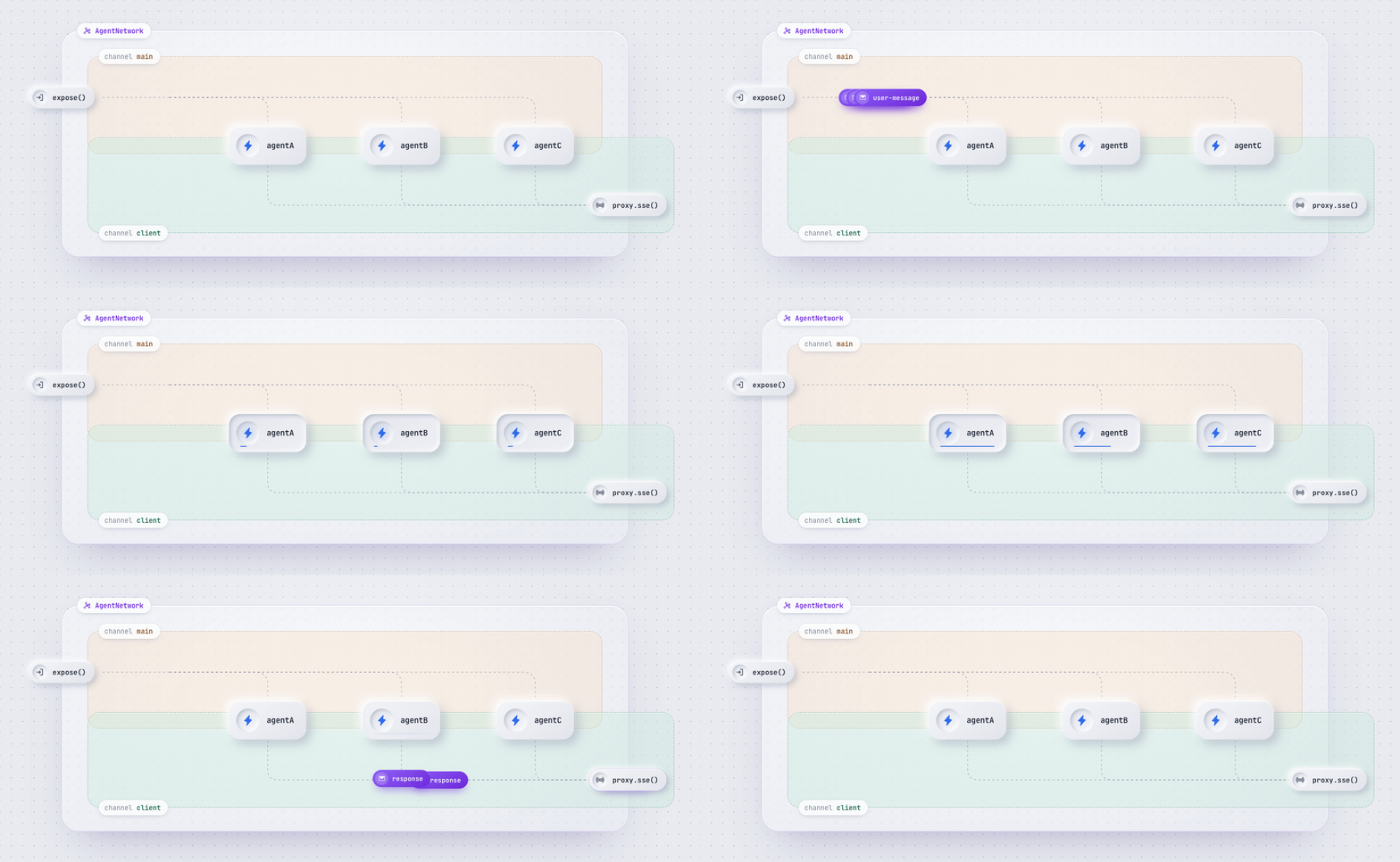
registerAgent(agentA).subscribe(main).publishTo(client);
registerAgent(agentB).subscribe(main).publishTo(client);
registerAgent(agentC).subscribe(main).publishTo(client);
Multi-Channel Routing
Different agents on different channels:
registerAgent(routerAgent).subscribe(main).publishTo(internal);
registerAgent(workerAgent).subscribe(internal).publishTo(client);
registerAgent(loggerAgent).subscribe(main).subscribe(internal);
See AgentNetwork API and Patterns guide for more.